Construction photos: week 11

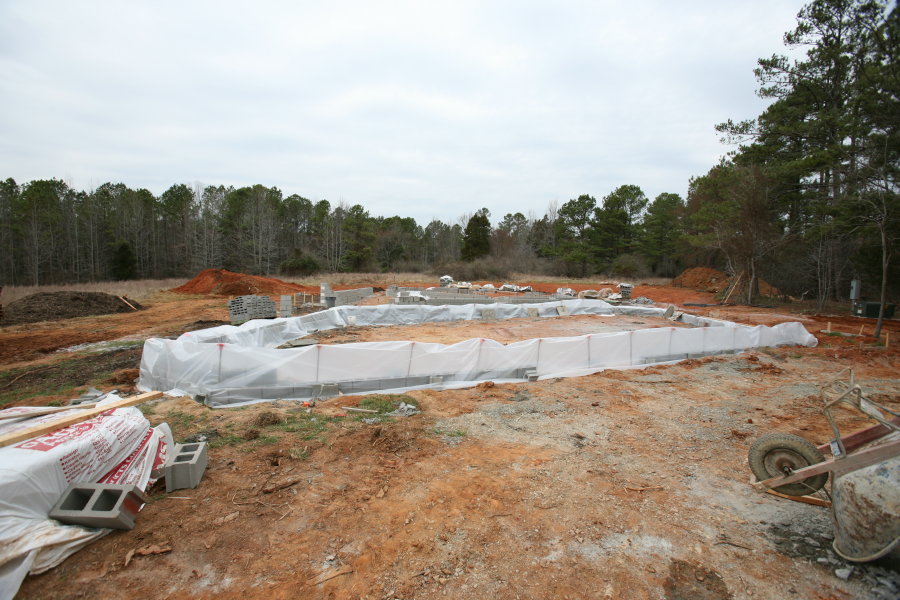
After laying down the strings to demarcate the wiring paths, it was time for the construction crew to turn design into reality.

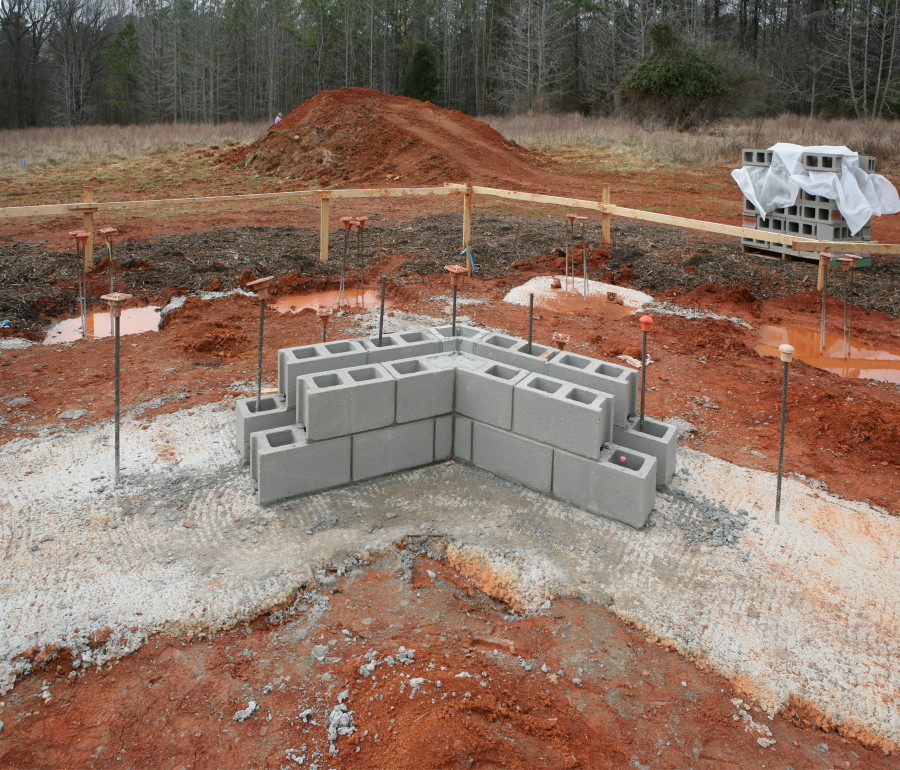
As you can see in the wiring plan, there are two prime areas of complexity: Grand Central (which lives under the large control room window) and the audio eQuipment Room (which we call the QR. The first week after laying down the string was mainly concerned with transition and logistics: getting the 4″ PVC Pipes, the gravel, and other prep work.

But there was also some progress made on the beginning of the matrix of pipes that will connect Grand Central with the console patchbays:

Continue reading “Construction photos: week 11”

The Rest is Noise (excerpt of first chapter)

I had a chance to read Part I of The Rest is Noise, and I am happy to report that the book has more than fulfilled the breathless promises made on the back cover. It is astounding. The New York Times has a lengthy excerpt of the first chapter. I don’t know about you, but when I read this text in the actual book it brought tears to my eyes. Several times. Does it have the same effect on others?

Construction photos: week 10

My apologies that there was no week 9. There was no visible progress as most of the work was finalizing the order for the blocks. The order is in, and we expect deliveries in about 4 weeks and the last blocks to be delivered by the end of April. Yipee!

This week we finished the wiring plan, down to the point of actually placing nails and string where pipe conduit is to go. The updated wiring plan looks something like this:

wireplan-24×36.pngFull 24×36 3/16 scale plan

And here’s what it all looks like in real life:

Continue reading “Construction photos: week 10”

The rest is noise…

The Rest is Noise (cover)

I read a fair number of books, though not nearly as many as Amy. And many times when I discuss these books with others, they say “can you send me your reading list?” Well, I’m going to start a new category on this blog, which is books and it will be used whenever I reference a book that’s relevant in some way to the experiment that is this studio project.

I visited our local bookstore this morning (talk about a business that’s almost as bad as the studio business) and saw The Rest Is Noise and had to pick it up. First, because the topic “listening to the twentieth century” is of great interest to me. Second, because the cover art is fantastic, and third because the inside jacket cover presented to me the very insight that has inspired me to create The Miraverse inside of Manifold Recording. Namely, while paintings by Pablo Picasso and Jackson Pollack sell for hundreds of millions of dollars, the equally influential music of the twentieth century struggles against the presumption that music is a dying art.

I have not yet read page one of the book, but here is what I’ll be attending to: I believe that we are presently (in 2008) discovering that consumerism is the true dead end. Not only does it kill the authentic self, but it’s destroying the earth as a habitat for humans as well. The fixed media form of art is particularly conducive to high valuation because it is unique and excludable. The diffusive form of music, which must be shared to be experienced, and which notably does not exist except when performed, presents a much greater challenge. All sorts of changes in copyright laws and other statutes to make music more like a painting have largely failed to create the ever-appreciating values we have seen in the world of paintings.

I believe that the problem with music as an industry is that we’ve tried to make it too much like a fixed medium, and records and CDs have only made this confusion the mainstream assumption. We need to return to music as a performance art, and we need to recognize the value and authenticity of experience. What is it worth to hear the greatest players playing the greatest music in the greatest halls or rooms? No, I’m not talking about Billy Joel and Sir Elton John playing piano at 125dB in a hockey rink. I’m talking about environments that fulfill music’s highest technical and artistic aspirations. This was the explicit goal of the design of the Music Room. (And to make it sustainable, we made it a carbon neutral recording studio.

I look forward to seeing how Ross’s narrative validates or challenges my own. Perhaps he’ll find an excuse to come to Pittsboro NC and hear for himself what a 21st century environment does for twentieth century music.
Construction photos: week 7 (screed level nearly done)

The masons got an amazing amount of work done last week, I have the photos to prove it!

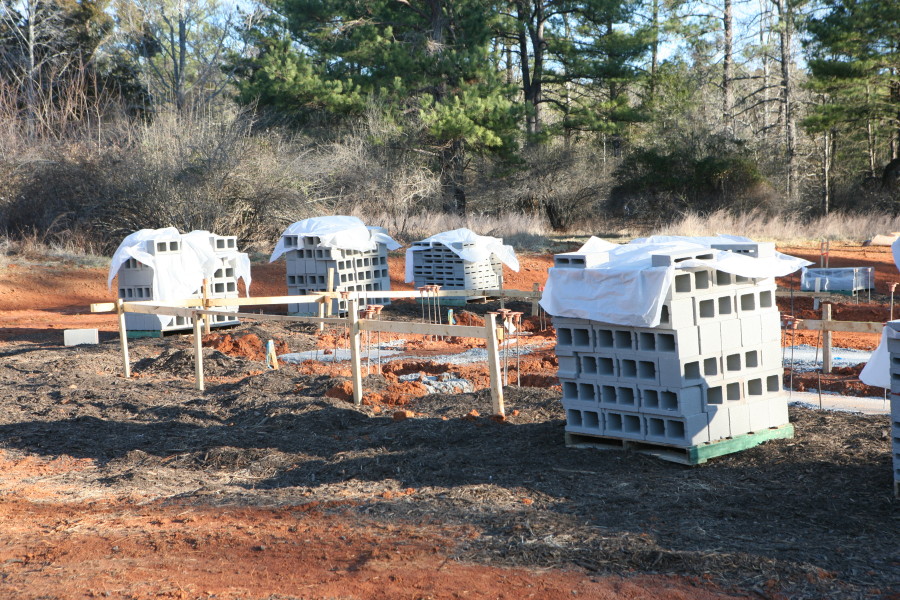
First, do you remember my Week 5 photos showing all the gray block on the site? Well most of those pallets are now here:
Empty Pallets

Many of them went to the garage:
Garage Entrance Garage, North View
The blocks are covered in plastic because the forecast was for rain and the mortar was still a bit “green”. But the garage walls were not the only ones being built up this past week, as you can see from this view of the overall site:

Continue reading “Construction photos: week 7 (screed level nearly done)”

Construction photos: week 6 (first mitered corners and block diagrams)

This past week was one of much work and little visible progress. On the construction site, the masons gave their new saw some more exercise, but it developed a wobble and needed to be rebuilt. By the end of the week they had managed to build two two-course corners at the foundation level. One of the mitered corners is pictured here:

Mitred corner at west edge of Music Room

Actually, the picture shows several features of the planned masonry construction.

Continue reading “Construction photos: week 6 (first mitered corners and block diagrams)”

Construction photos: week 5 (grayblock below grade)

More than a dozen pallets of greyblock are now positioned on the site to be placed on the footings and create the basin into which the concrete slab will be poured.

Pallets of grayblock

You can tell how far up the grayblock needs to go: the wood framing on the far side of the site shows where the finished floor elevation will be. We’ll use architectural block for the course that brings us to that level (and then to where people can see it), but grayblock all the way down. As you can see, there’s quite a number of courses to reach that point, which looks like “up” right now, but will seem “down” when the slab is poured and ultimately the dirt, which is also in the background, is replaced. Here you can see how “high” (or “deep”) we’ll be going:

Continue reading “Construction photos: week 5 (grayblock below grade)”

Remembering a Dream: Queen's Night at the Opera

Brian May re-visits Rockfield Studios and helps piece together the history behind Bohemian Rhapsody.  What a great bit of history, and what a great motivation to do everything we can at Manifold Recording to capture everything that technology allows: HD (or better) video, high-rate 24-bit audio, the works.  Enjoy!

Linda Ronstadt had her chance…but who’s going to get it now?

Growing up in the 1970s, Linda Ronstadt was one of the first female vocalists that made me want to spend more time on the Rock and Roll side of the FM dial and less time listening to classical music on our local NPR affiliate, WMHT. But a few weeks ago, completely by chance, I heard her talking about her experiences in the Music industry as a special guest of the NPR news quiz show Wait Wait…Don’t Tell Me, and the course of the interview practically wrote a blog posting for the Miraverse concept. Here’s my transcription of the relevant stories:

Continue reading “Linda Ronstadt had her chance…but who’s going to get it now?”