Week 101 (Laying the Bent Steel Beam)

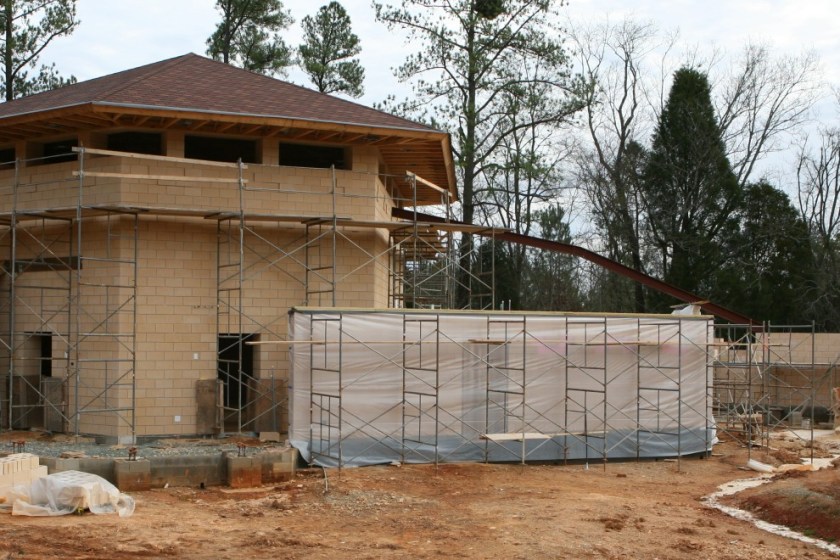
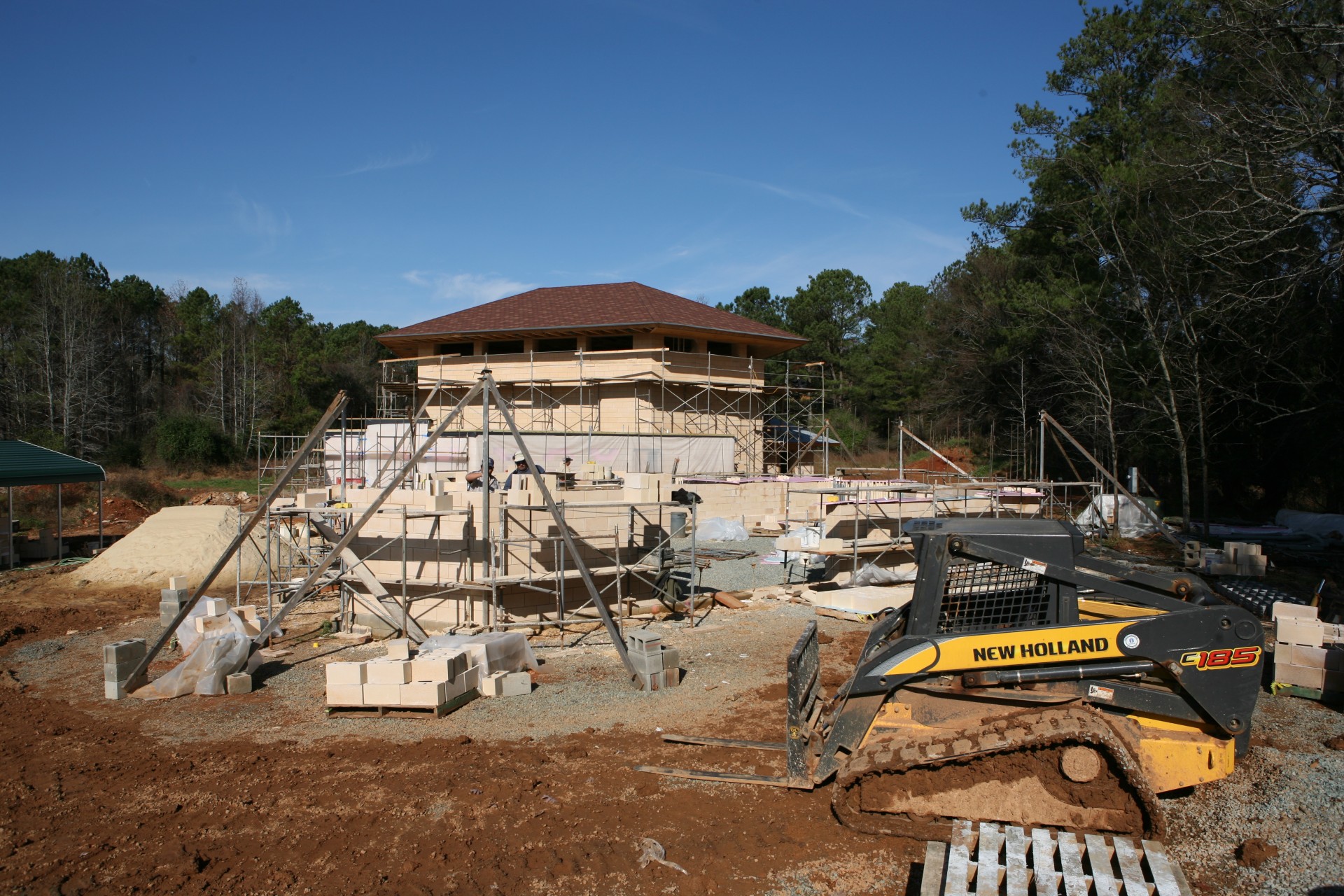
One fact of our construction process is this: everything is important.  The blocks on the 7th course depend on those in the 6th, and those in the 6th depend on the 5th, etc.  Nevertheless, there are days when something extraordinary happens, something that opens the door to the next major transformation of the project, and this week was special because we had one of those days.  This is the week that we laid the bent steel beam that defines the roof ridge of the Control Room.  Here is that profile from the West Elevation:

ControlRoomRoofProfile-detail

This beam has already perplexed a few who have seen it, so let me just explain a few details.

Continue reading “Week 101 (Laying the Bent Steel Beam)”

Jazz Music and Open Source Software

Who knew that Open Standards maven Andrew Updegrove was a jazz fan?  He riffs:

Jazz, of course, is open source all the way — it’s the ultimate freedom machine. Once you’ve grasped the melody line and basic chord structure of any song, you’re on your own, encouraged to take the author’s initial inspiration anywhere you wish. A jazz musician isn’t judged by the faithfulness of his rendition but by what he codes at the musical keys.

Even the legal underpinnings of jazz are different, at least in the trenches. No one who is really serious about jazz goes out and buys, say, an Oscar Peterson, Miles Davis or Mahavishnu John McLaughlin song book, setting down note for note what the great musician played. How could you? They played it different every time.

You can read more of this wonderful entry here.  Me?  I need to go practice more songs from The Real Book.

Weathervane Music points to a new future

Weathervane Music is a non-profit, community supported production company, making music and video to support and advance the careers of amazing independent musicians. Unlike traditional for-profit production or record companies, the vast majority of proceeds from the recordings of this music go straight to the artists, which Weathervane Music selects. I first heard about them when Brian McTear made this announcement in June, and I’ve been meaning to blog about it ever since:

Hi all,

Long time no speak! I’ve been really busy putting together a new non-profit organization called Weathervane Music. In a nutshell we’re experimenting with a new model for how to fund and promote the work of great independent musicians.

Our main focus to start is something we’re calling the Weathervane Music Project Series. It’s a curated music and music-related video series produced for the web in which selected artists come into the studio (at no cost to them, of course) and record a song. The whole thing is artfully captured in hi-definition video, providing great exposure for the artist, some interesting material for gear enthusiasts, and a general primer for Weathervane’s mission.

Now NPR‘s All Things Considered has beat me to it, six months later as part of The Decade in Music: ’00s. NPR’s extraordinary instinct of going beyond the death and destruction of virtually all the major recording studios in New York City (Recording Studios Face an Uncertain Future) paid off by looking at the dynamics of low-rent Philadelphia (where commercial studios are also struggling), and discovering the diamond-in-the-rough story of an environment providing free recording services to a handful of deserving artists. But the reporting could have gone much further…

Continue reading “Weathervane Music points to a new future”
Week 100 (Upper ext. soffit finish, Annex to 9th course)

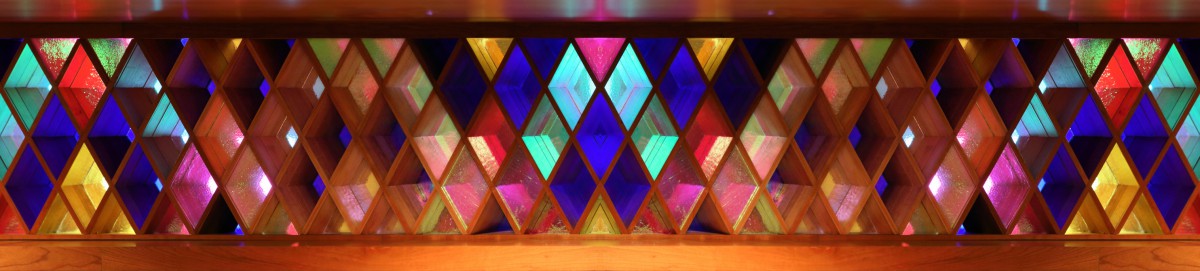
This week features two parallel story lines: the installation of half the upper soffit cypress soffit, and the raising of the Annex walls to the 9th course.  Here is a single photo that shows both achievements (plus more which are detailed below):annexoverviewcourse9.jpg
Continue reading “Week 100 (Upper ext. soffit finish, Annex to 9th course)”

The Jazz Loft Project

On December 3rd I attended the Jazz Loft Project book and website launch event at the West End Wine Bar in Durham, NC.  WUNC’s Frank Stasio, always on top of local goings on, clued me in.  It was packed, despite the venue being situated by LOCAL TRAFFIC ONLY signs from all approaches.  Where else would Jazz fans congregate, if not in some well-hidden bar that’s so small you’d need three of them just to hold all the people who came to hear the music?

Needless to say I bought the book, got it signed, and have since met people who are on their third reading of the text.  I’m trying to save it for Christmas!

I look forward to the time when, perhaps 40 years from now, The Miraverse has become the definitive archive for a new collection of music representing a meaningful continuum of talent and community.

Week 99 (Annex Masonry to the 6th (!) Course)

It’s Thanksgiving Day weekend in the US, and so you might think that the 4th course relates to our progress through dinner, but this posting is strictly about the continued progress of our construction project.  Due to poor weather and the Thanksgiving Day holiday, we only got a few days of work done, but enough to bring the Annex masonry up to the 4th course.  Here’s an idea of just how muddy things got during the past two weeks of mostly rain:

prethanksgivingmud.jpg

Continue reading “Week 99 (Annex Masonry to the 6th (!) Course)”

Week 98 (Annex masonry begins)

Last week we lost a good deal of construction time due to the remnants of Hurricane Ida.  This week the storms were more local in nature, but just as harmful to our construction schedule, costing us a good three of our five working days.  But that means we did manage to get two workdays in, and that was enough to begin bringing up the walls of the Annex.  The story begins with a new set of storey poles (or, more precisely, the poles recycled from the construction of the main building, placed in new locations):

annexstoreypoles.jpg

Continue reading “Week 98 (Annex masonry begins)”

Who (or what) killed rock and roll?

Like the old man in Bring Out Your Dead scene in Monty Python’s Holy Grail, rock and roll continues to protest that it’s not dead yet.  But the number of ingrates willing to club it on the head, toss it on the cart, and wheel it out of town is mind-boggling.  There are so many villains to this story, but I’m going to focus on those that appear in two story lines from last week.

Continue reading “Who (or what) killed rock and roll?”

Freedoms promised in 1976 may finally be realized

A posting on the  WIRED magazine property Epicenter has some pretty exciting news about the Copyright Act of 1976, including the fact that a good-sized catalog of music will revert to the control of artists from the control of record labels.  Unfortunately, the title of the article frames the story as terrible news instead of the good news that it is.  Bands like the Eagles are lining up to take advantage of this part of the copyright bargain coming to pass.  Hopefully they will get what they were promised 35 years ago.  If I were paying a mortgage on a house for 35 years, I would expect that with my final payment, the house would finally accrue to me when the mortgage expired, but the history of the US government and copyright (at least in the past 100 years) has been to consistently change the bargain at the last minute so that those of us who are due rights promised to us in the future never actually see that future arrive.

Will this time be different?  I hope so, because I’d like to see what happens when the artists, not the labels, can act as stewards of the artists’s works.  I think we’ve suffered the monopoly control of the labels for far too long, with far too little good to show for it.

McKinsey says Creative Commons matters

Joi Ito had a major article published by McKinsey & Co in their journal What Matters.  The article is titled Creative Commons: Enabling the next level of innovation and the punchline is pretty powerful:

TCP/IP and the Web are successful because they are based on open standards shepherded by nonprofit organizations that allow input from a wide variety of stakeholders. Similarly, Creative Commons is a nonprofit organization with thousands of volunteers in over 80 countries working to develop standards for content sharing and helping organizations to adopt these standards. Having 100 Internets or 100 World Wide Webs governed by incompatible standards would suffocate the network effects that we enjoy on our one interoperable Web. Having a single set of copyright licenses and a single metadata format is key to creating the network effect of interoperability at the collaboration level.

In the early days, those of us who were proponents of TCP/IP had to argue with regulators, lawyers, and technologists who, for a variety of reasons, did not support the standard. Creative Commons still has critics who do not yet understand the benefits of the network effects and collaboration that it enables. Like each new layer of the Internet stack, Creative Commons will soon become, in hindsight, an obviously necessary ingredient for collaboration, enabling yet-to-be-imagined innovations that will have a dramatically positive effect on business, society, and the environment.

So if you are licensing creative content, get with the program and find the Creative Commons license that maximizes the functional, interoperable, useful value of your creativity.